Interference: the actual trick behind quantum computing
Forget 'trying all possibilities.' Quantum computing works because wrong answers can cancel themselves out. Here's how.
If you’ve read about qubits, you know they have amplitudes instead of plain probabilities. If you haven’t, start there.
Interference is where amplitudes become useful. It’s the core mechanism that makes quantum algorithms work — and understanding it demystifies most of the field.
Two paths to the same answer
Here’s the simplest way to think about it.
Imagine you’re solving a maze. There are many possible paths from start to finish. In a classical computer, you’d explore paths one at a time (or cleverly prune them). In a quantum computer, all paths exist simultaneously as amplitudes.
Now here’s the trick: each path has an amplitude, and amplitudes can be positive or negative. When two paths lead to the same wrong exit, but one has a positive amplitude and the other has a negative amplitude of equal size, they cancel out. That wrong exit becomes impossible.
Meanwhile, paths leading to the right exit can be arranged to have amplitudes that add up — making the right answer more likely.
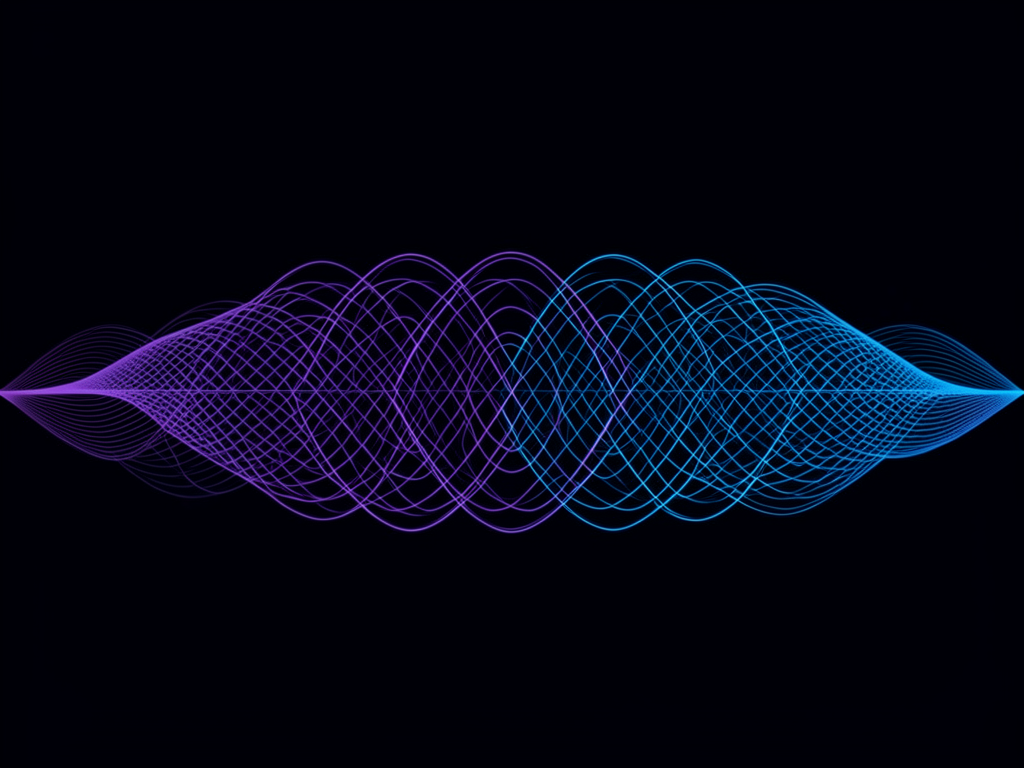
This is exactly what happens when you throw two stones into a pond. Where wave peaks meet peaks, you get bigger waves. Where peaks meet troughs, the water goes flat. Quantum algorithms are designed to create exactly this pattern: constructive interference on the right answer, destructive interference on everything else.
Why this isn’t just “trying everything”
People hear “all paths exist simultaneously” and think quantum computers try every answer in parallel, then pick the best one. If that were true, quantum computers would solve everything instantly. They don’t.
The constraint is this: you can only measure once, and you get one answer. All that interference has to happen before measurement. The algorithm has to be designed so that the amplitudes pile up on the right answer — and that design is problem-specific and often very hard.
For some problems (like factoring large numbers or simulating molecules), physicists have found clever ways to arrange the interference. For many other problems, no one has found a way. That’s why quantum computers aren’t universally faster.
A physical example: the double-slit experiment
The most famous demonstration of interference is the double-slit experiment, which Feynman called “the only mystery” of quantum mechanics.
Shoot particles (photons, electrons — it works with both) at a barrier with two slits. On the wall behind, you’d expect two clusters of hits, one behind each slit.
Instead, you get a striped pattern: alternating bands of many hits and zero hits. The particles went through both slits, and the two paths interfered with each other. Some spots on the wall get double intensity (constructive), others get zero (destructive).
This happens even if you send particles one at a time. Each individual particle seems to interfere with itself — because the amplitude for “went through slit A” and the amplitude for “went through slit B” add together.
That’s quantum interference. It’s not theoretical. It’s been observed in labs for over a century.
Seeing it in the notation
The simplest example of interference is the Hadamard gate — the most common operation in quantum computing. It takes a qubit in state |0⟩ and spreads it into equal superposition:
H|0⟩ = (1/√2)|0⟩ + (1/√2)|1⟩
Both amplitudes are positive. Measuring gives 0 or 1 with 50/50 odds.
Now apply the Hadamard gate to |1⟩:
H|1⟩ = (1/√2)|0⟩ − (1/√2)|1⟩
The amplitude for |1⟩ is now negative. Still 50/50 if you measure — because you square the amplitudes to get probabilities, and (−1/√2)² = (1/√2)² = ½.
But here’s where it gets interesting. Apply the Hadamard a second time to H|0⟩:
H(H|0⟩) = H((1/√2)|0⟩ + (1/√2)|1⟩)
The |0⟩ part generates +(1/√2)|0⟩ + (1/√2)|1⟩. The |1⟩ part generates +(1/√2)|0⟩ − (1/√2)|1⟩.
Add them up: the |0⟩ amplitudes add (+1/√2 + 1/√2 = √2), but the |1⟩ amplitudes cancel (+1/√2 − 1/√2 = 0).
Result: you get |0⟩ back, with certainty. The negative amplitude made |1⟩ destructively interfere with itself.
That’s interference in action — one operation, two lines of notation, and you can see exactly how amplitudes cancel.
How quantum algorithms use interference
Every quantum algorithm follows roughly the same recipe:
- Start with qubits in a definite state (usually all 0s)
- Spread the amplitudes across many possible answers (create superposition)
- Shape the amplitudes so that wrong answers destructively interfere (this is the algorithm-specific clever part)
- Measure and get the right answer with high probability
The hard step is number 3. That’s where all the ingenuity goes. Grover’s search algorithm uses a specific reflection trick. Shor’s factoring algorithm uses modular arithmetic properties. Each algorithm exploits a different mathematical structure to make interference work in its favour.
Why some problems are “quantum-hard” and others aren’t
If you can’t find a way to make wrong answers cancel out, quantum computing doesn’t help. And for most everyday problems, there’s no known way to arrange the interference.
This is why quantum computers won’t replace your laptop. They’ll be specialist tools for problems where the mathematical structure allows interference to create shortcuts.
Think of it like a hammer: incredibly useful for nails, pointless for screws.
The honest summary
- Quantum computing works by interference: amplitudes for wrong answers cancel out, amplitudes for right answers add up
- This is the same physics as waves cancelling in a pond or the double-slit experiment
- It’s NOT “trying all answers at once” — the interference has to be carefully designed
- Only works for problems where the mathematical structure allows it
- This is why quantum computers are specialist tools, not universal speedups
What’s next?
Interference explains how quantum algorithms work. But building a machine that can actually run them is extraordinarily difficult because of noise and decoherence — the tendency of qubits to lose their quantum properties before the computation finishes.